FROM THIS MONTH'S NETWORK BRIEFING
The flow the network
rejects
has to land somewhere.
Tapaas is the cross-broker risk intelligence network for retail FX/CFD brokers. It
surfaces the toxic flow, recurring operators and paired-account extraction that no
single book can see — in real time, before it lands on yours.
Volume normal. Style unremarkable. No flag raised — until the network joined the halves.
Six venues are watching this account.
You're seeing one.Click account 4471 to see what the network sees →
The opposite side, at another broker, in the same second. Neither half looks like abuse alone. Together, it's extraction.
Measured across the Tapaas network — not modelled

Long term investor information
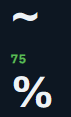
share of toxic trades in key instruments during this year's peak volatility windows — roughly double the baseline rate. The syndicates and professional abusers behind them act immediately on new opportunities.
Long term share holder information
of abusive accounts on the network are recurring — the same operators re-registering across venues. Many are recognised before their first deposit.

Investment information for owners
paired-account signals visible from inside a single book. Not a modelling gap — a data gap no amount of feature engineering can close.
Source: Tapaas network telemetry, 2026. Figures reflect cross-venue observation, not extrapolation.
The problem
You can see the ones you caught.
This is about the ones you didn't.
what the network sees
Three signals that don't exist inside your
own data.
Signal 01 · Recurrence
Operators arriving from other venues
Cross-broker identity intelligence recognises recurring abusers as they re-register — matching behaviour, not just credentials. Every account carries a structured label — an M-Label — applied the same way across every venue it touches, so patterns reach your risk committee as evidence, not anecdotes.
→ M-Labelled before first deposit
Signal 02 · pairing
Opposite sides at different brokers
An account that looks clean on your flow may be one half of a mirrored pair — the other half trading the exact opposite at another broker, in the same second. Fewer than 7% of the account pairs the matching engine reviews earn an economic label: a small, professional population doing nearly all the damage. Every broker in the network sees both halves. Outside it, nobody does.
→ risk-free extraction, exposed
Signal 02 · pairing
Who's carrying the compression
Net spread revenue benchmarking shows whether your revenue per million is holding against the network — or whether your desk is quietly subsidising abuse while reporting healthy volume. Last period every asset class we track fell: the most resilient lost 11%, and three fell past 100%, where yield didn't just compress but turned negative. The comparison your own data can't produce.
→ NSR vs network, per book
Speed, on the record
When the pattern forms, Tapaas alerts in seconds — not in tomorrow's report.
Conventional surveillance is retrospective: the abuse surfaces in end-of-day reporting, after the damage has posted. Tapaas alerts fire within seconds of a pattern forming — across venues, in-session, while the positions are still open. No other risk-management platform alerts at that speed. And you can watch it happen: in a live session we show M-Labels being applied to cross-broker abusers in real time, many before the account's first deposit.
beyond xba
Cross-broker abuse is the sharpest signal
— not the whole problem.
Data · Unified
Unified data layer
All systems feeding one intelligence environment — platforms, bridges and back-office consolidated into a single source of truth, so every risk decision runs on the same picture.
Surveillance · Profiling
Trader surveillance & M-Labels
Every account behaviour-profiled and consistently labelled — scalping, latency play, copy-trade abuse and more — so your desk shares one vocabulary and your committee gets evidence.
Smart tools · Decay & VaR
Decay analysis & VaR
Smart tools that show how flow actually performs after the fill and where exposure concentrates — trade decay and value-at-risk, continuously, per book, symbol and client segment.
Alerting · Seconds
One alerting engine across it all
The same seconds-fast alerting that catches XBA covers exposure breaches, toxic bursts and yield anomalies — one engine, every risk lens, in-session.
Not ready for a walkthrough?
Keep receiving the monthly network briefing — the same cross-venue intelligence this page is built on, in your inbox once a month. No sales sequence attached.